

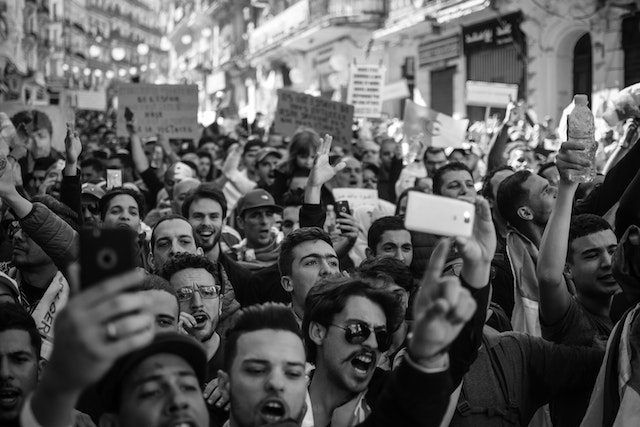
Human rights help the fight for social justice in several ways. First, they protect people from discrimination, exploitation, and poverty. While these rights are considered essential, they’re not always taken for granted in some societies. For example, clean water is a fundamental human right that isn’t guaranteed to people in Flint, Michigan, and food deserts are common throughout the United States. In Oregon and Washington, the homeless crisis has reached critical levels. As we fight for social justice, it’s important to remember that human rights extend beyond our borders and don’t just apply to us.
Pillar of Social Justice
Human rights and social justice go hand in hand, and both aim to ensure that everyone enjoys equal access to resources and opportunities. While social justice does not guarantee a perfect society, it does mean that everyone has a fair chance to live the life they want. Although there is no single framework for implementing social justice, participation and equity are essential to all efforts to create an equal society.
These principles guide the actions of the European Union to promote social justice. An excellent example is the European Pillar of Social Rights, which establishes 20 principles to strengthen citizens’ social rights. The Pillar also proposes headline targets for the European Union to reach by 2030.
Human rights protect the human person from being exploited and abused. These rights are expressed in laws, conventions, and treaties. These documents result from struggles to ensure life and dignity for all. Human dignity and equality are further enhanced as these rights are continually expanded. Therefore, engaging in the fight for human rights is an act of faith and a response to the love of God in Jesus Christ. Speaking in front of an audience is crucial in fighting for human rights. Words have great power. When used by skilled orators, they have the power to uplift, heal, and unite sizable crowds of people. And what is more deserving of support than inherent dignity and equal rights? Publish Speaker, Mohamed Soltan, as well as other human rights advocates, connects to fight for this belief.
Protect Against Discrimination
Human rights are a crucial part of the fight for social justice. These rights protect against discrimination in various contexts. Discrimination is when a person is treated differently from another. This difference cannot be objectively justified. In addition, discrimination can occur when a person is treated the same as another when the circumstances differ. The Human Rights Act protects against discrimination in specific areas of life, but the Equality Act 2010 covers a broader range of situations.
Although the belief that every human being is entitled to human rights is relatively new, it has deep roots in earlier traditions and documents. Since World War II, nations have been working to establish what rights belong to all people and how to protect and promote them. The underlying principle of human rights recognizes that all people have dignity and fundamental worth.
In the 19th century, governments and individuals recognized the need to protect citizens against discrimination. In the United States, President Franklin Delano Roosevelt spoke about the importance of protecting the rights of minorities in the struggle for social justice. The French Declaration of Human Rights of Man and Citizen, formulated after World War I, also challenged the aristocracy and recognized the equality of human beings. The United States Bill of Rights established the rights of individual citizens, including the freedom of speech, religion, and assembly.
Protect Against Poverty
Human rights are crucial in fighting social justice because they help protect against poverty and deprivation. When people are denied essential goods and services, they quickly experience abuses of their human rights. When these deprivations are not challenged, poverty becomes entrenched and economic inequality is exacerbated. In addition, human rights promote dignity, health, and access to resources.
The concept of human rights has roots in many cultures and traditions. It is a response to fundamental human wants and was not invented by the West. Additionally, it is the outcome of a quest for justice. These principles have shaped all human communities.
The United Nations Special Rapporteur on Extreme Poverty and Inequality has outlined some recommendations for the future. These include giving economic rights the same prominence as other rights, recognizing the right to social protection, and introducing fiscal policies to reduce inequality.