

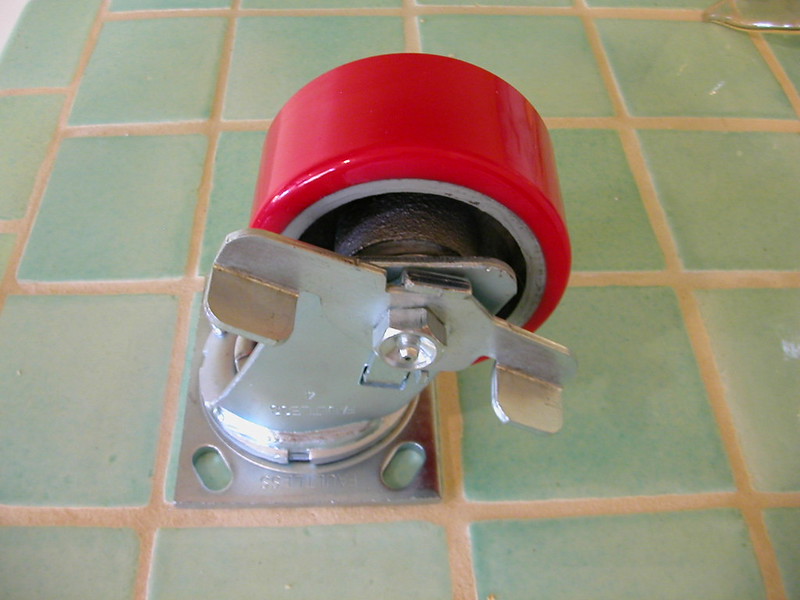
Casters with locks add stability to carts and furniture. They also prevent them from moving around or rolling away unexpectedly and causing damage.
They give operators more flexibility and control when moving and steering a loaded material-handling cart over long distances. Typically, casters with locks are built into the original design instead of being added after the fact.
Stability
Locking casters are perfect if you want to keep furniture in one place. These casters include a mechanism that keeps the wheel brake and swivel head locked simultaneously. This prevents caster movement, creating a solid foundation to push or pull equipment over long distances.
This caster type is ideal for furniture that needs to stay stationary in high-traffic areas or if young children or pets are present. It’s less likely that the caster will move unexpectedly, which can cause injury.
When choosing a caster with locks, it’s essential to ensure that the bolt pattern matches the caster. Otherwise, a swivel lock may not fit on another brand of caster. This is why it’s best to buy the caster and locks together as a matched set. Central locking casters are commonly used on hospital beds for added stability. These casters have a built-in lock to secure the swivel head and prevent rolling over long distances.
Safety
Locking casters are far less likely to roll away and cause an accident, especially if children or pets are present. It is also much easier to maneuver than a cart with swivel wheels that require considerable force to keep stationary and could easily tip over.
Central locking systems are particularly beneficial for business owners. They allow multiple casters to be locked or released using the same pedal rather than forcing users to juggle several pedals around the equipment. This saves time, improves efficiency and ergonomics, and prevents the risk of injury.
Many different types of locks are available depending on the needs of a particular application. For example, a total lock brake immediately secures the wheel and swivel, ideal for medical equipment or retail store fixtures. A directional lock allows the swivel to rotate freely but locks it into a straight position and is commonly used on hospital carts.
Durability
When you use casters in your office, warehouse, or manufacturing facility, you want to know they will hold up to repeated movement. Unlike traditional swivel caster wheels, which can break easily due to shock and stress, locking swivel casters are built for durability. They feature a rigid polyurethane raceway that will not scratch or mar your floors like plasticized rubber.
A caster is an accessory attached to the underside of furniture, industrial carts, and other equipment that allows it to roll. While some casters have brakes to stop wheel movement and some control swivel rotation, sometimes you need your equipment to remain stationary in one location for an extended period. When this is the case, you need a caster with locks. This caster type has notches in the upper raceway where a pin can be inserted to lock the swivel function, so your equipment is locked down and immobile. This is commonly used on workstations, mobile platforms, and other industrial equipment to prevent accidental rolling or turning injuries.
Mobility
Casters help equipment move, whether carts, racks, or dollies. They come in various wheel sizes, tire widths, and weight ratings to provide maneuverability for different work environments.
While casters make equipment easy to move, sometimes they must remain stationary to prevent accidents and damage. This is where locking casters come in handy.
Using a caster lock on a 360-degree swivel caster turns the wheels into a rigid caster in seconds. This allows operators to steer their material-handling carts while traveling long distances without continually pushing the equipment in a straight line. This type of caster lock can be field-installed on existing swivel casters. Depending on the unit’s design, it can be attached to either the top or bottom of a swivel caster. Adding this feature can make a big difference in the longevity and durability of a piece of equipment.