

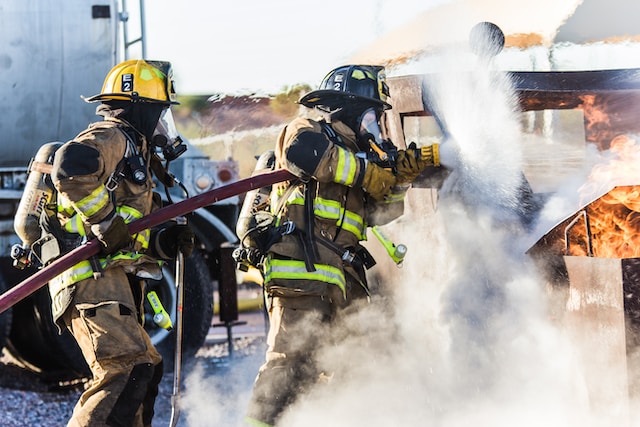
Firefighting involves more than just fighting fires. There are emergency medical calls, vehicle accidents, inspections, and training. The job is challenging and requires a lot of dedication and perseverance.
The standards for firefighters establish minimum job performance requirements (JPRs) for career and volunteer firefighters. State government agencies like the Texas Commission on Fire Protection provide training guidelines.Basic Fire Suppression TrainingThe state of Texas offers basic fire suppression training through colleges and universities, independent fire academies, and local city and town agencies. Individual departments often maintain additional requirements on top of state mandates to ensure their firefighters are qualified to work for them.Students who complete the academy receive a course completion certificate and can take the Designated Skills Test to become certified firefighters. They also accept credit towards the College’s Fire Technology AAS Degree.The program integrates online coursework and hands-on weekend training to prepare students for a firefighting career. The job is demanding and requires a physically fit person, a team player, willing to think on their feet, and an excellent attitude. Applicants must pass a background check and have a valid class “B” driver’s license to be employed by a fire department. Responsibilities include responding to emergency medical calls, inspections, car wrecks, and fire alarms.Emergency Medical Technician TrainingOnce a future firefighter completes basic fire suppression training, they must take a series of physical tests and a comprehensive background check. The State of Texas also requires firefighters to meet emergency medical technician training through either a Department of Health Services program or the American Red Cross responder program.An EMT is a first-response healthcare professional who provides care to patients on-scene and during ambulance transport to a higher level of healthcare. The EMT program requires at least 140 hours of classroom, lab, and clinical training.Various criminal convictions will disqualify you from becoming certified as a firefighter or an EMS professional in Texas. If you are concerned that your criminal history will interfere with your eligibility, please talk to your program’s staff or faculty members. They can help you work through the process and guide you on what options may be available.Firefighter CertificationIn addition to passing a physical test, firefighting candidates must complete basic fire suppression training and earn emergency medical certifications. Many educational institutions provide programs that meet these requirements. Students should choose a school that offers firefighter certification Texas near their intended work location or has strong connections with local fire departments.Firefighters must be willing to work shifts, often 24 hours on and 48 hours off. They need to be physically fit, able to handle stress and difficult situations in confined spaces, and willing to undergo long periods of intense training.The firefighter program provides information and resources for firefighters in the state. Its website features fire suppression information and training, employment opportunities, policy and procedures, and training materials. Firefighters should also check out the other sites that provide service training and events, news updates, and publications. In addition, some groups serve as clearinghouses for firefighting information and resources.Resources for FirefightersFirefighting is a physical job that requires stamina, agility, and mental sharpness. It’s also stressful. This is not a career for everybody. It involves emergency medical calls, training, car accidents, inspections, and shift work. Firefighters must know about behavioral health resources and how to access them, especially after traumatic incidents.Some programs offer peer support for their members and their families. It also advocates for firefighters within the state legislature and provides contract and collective bargaining support. It also holds service training and annual events.The firefighter program defines a pathway for fire departments to push their level of service to a higher standard. This designation gives a third-party validation that a fire department performs excellently in critical areas, such as long-term planning, risk management, standard operating guidelines, deployment analysis, etc. It can fund the first year of fees for fire departments pursuing this program.